

A QHSE /Quality Hygiene Environment Health and Safety Officer plays a vital role in maintaining Quality, Health, Safety, and Environmental standards in food manufacturing, catering, hospitality, logistics, and food service industries. The responsibility of a QHSE Officer is not limited to workplace safety alone; they are also responsible for implementing food safety systems, maintaining hygiene compliance, reducing operational risks, and ensuring compliance with HACCP, ISO, GMP, and local food regulations.
In modern food industries, companies are increasingly hiring qualified QHSE professionals to establish strong food safety cultures, improve operational standards, and support international compliance requirements such as ISO 22000, ISO 9001, ISO 14001, and ISO 45001.
What is a QHSE Officer?
A QHSE Officer is a professional responsible for ensuring that an organization follows proper Quality, Health, Safety, and Environmental practices. In the food industry, a QHSE Officer helps organizations maintain food hygiene, employee safety, environmental sustainability, and legal compliance.
The officer works closely with production teams, quality assurance departments, warehouse staff, maintenance teams, and management to ensure safe food production and safe workplace operations.
Objectives of a QHSE Officer in Food Industry
Let’s look into a detailed job description of a QHSE officer in the Food Industry.
- Monitoring the facility’s Safety Management programs, policies, and procedures
- To assist with efficient sustainable environmental practices, thus permitting to ensure compliance.
- Check Raw materials and final goods (FG) as per the standard.
- Monitor every warehouse’s finished and raw materials.
- Check that all files & checklists are updated as per the environmental safety management systems like ISO 14001, and ISO 45001.
- Perform job safety analysis (JSA’s) and recommend corrective actions.
- Conduct safety training including new employee orientation, and specific Quality and occupational health and safety topic training for individuals.
- Inspect and maintain safety equipment, including fire blanket and extinguisher safety showers/eye wash, and First Aid kits.
- Assist with maintaining the facility-wide, chemical inventory list and Safety Data Sheets. (SDS)
- Ensure all departments have the tools and information to implement safety programs and initiatives effectively.
QHSE Officer in Food Safety
- Be responsible for implementing the food safety culture in the company and directly involve all the food safety activities to produce safe food for the customers.
- Ensure that Prerequisite programs-cleaning and sanitization, pest control, waste management, calibration, water tank cleaning, lab analysis, customer complaints management, and supplier approval, are in place.
- Coordinating with Operations Manager, Production Supervisor / Store in charge, of production activities.
- Responsible for GHP and overseeing food safety and hygiene standards to maintain legislative compliance.
- Maintains workflow by monitoring process steps;
- Setting processing variables.
- observing control points and equipment.
- Monitoring personnel and resources.
- Implementing cost reductions; reporting procedures and systems.
- Facilitating corrections to malfunctions within process control points.
- Initiating and fostering a spirit of cooperation within and between departments.
- Ensure that Health and Safety requirements are being met by supporting and participating in regular Health & Safety meetings.
- Conduct Quality, safety and environmental audits timely.
Proper and perfect signage in the food industry is a safety definition. Any deviation in safety that causes hazards and risks must be announced with immediate signage.
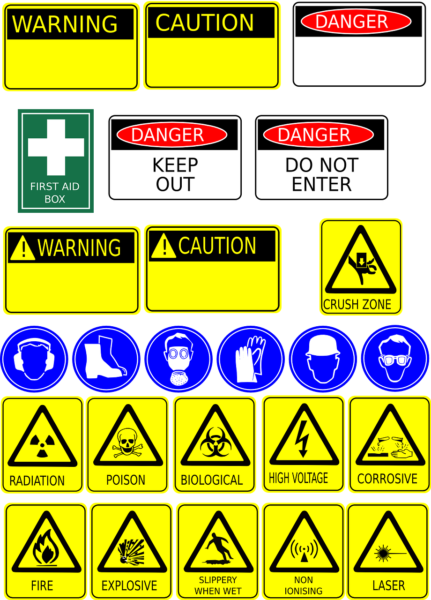
Permanent and Temporary safety signages are placed accordingly by a QHSE Team during monitoring and inspection activities.
Qualifications Required for QHSE Officer Jobs
Most companies prefer candidates with:
- Bachelor’s Degree in Food Technology, Food Science, Microbiology, Environmental Science, or Occupational Health & Safety
- HACCP Certification
- NEBOSH or IOSH Certification
- ISO 22000 Internal Auditor or Lead Auditor Certification
- Food Safety Level 3 or Level 4 Certification
- Knowledge of GMP, GHP, and FSMS
Career Opportunities for QHSE Officers
QHSE professionals are highly demanded in:
- Food manufacturing companies
- Catering industries
- Hospitality and hotels
- Airlines and flight kitchens
- Dairy industries
- Restaurants and cafes
- Food warehouses and logistics
- Retail food chains
- Pharmaceutical industries
The increasing focus on food safety regulations and workplace safety has created excellent career opportunities for qualified QHSE Officers globally.
Training Programs for Insurance Claims
Understanding how QHSE Training Programs relate to insurance claims is crucial. When accidents or incidents occur, having a trained workforce can make a significant difference in the outcome of an insurance claim process.
Insurance companies like TATA Aig and Max life, often require policyholders to adhere to industry standards and regulations. If a business fails to meet these requirements, the chances of a rejected claim increase. QHSE training ensures that the workforce is well-versed in these standards, thus boosting the chances of a successful claim.

Conclusion
A QHSE Officer is one of the most important professionals in the food industry. Their responsibilities extend beyond inspections and documentation; they help organizations build a strong culture of food safety, quality assurance, workplace safety, and environmental responsibility.
With increasing awareness of food hygiene, HACCP implementation, ISO certifications, and occupational health and safety standards, the demand for skilled QHSE Officers continues to grow in food manufacturing, catering, hospitality, and retail food sectors worldwide.